
Whiny Women: Mixed-Media Exhibition
Dhaka Gallery
January 4th & 5th, 2020
AR-Animation | Film
Traditional Art | Digital Art
Sculpture | Visual Poetry
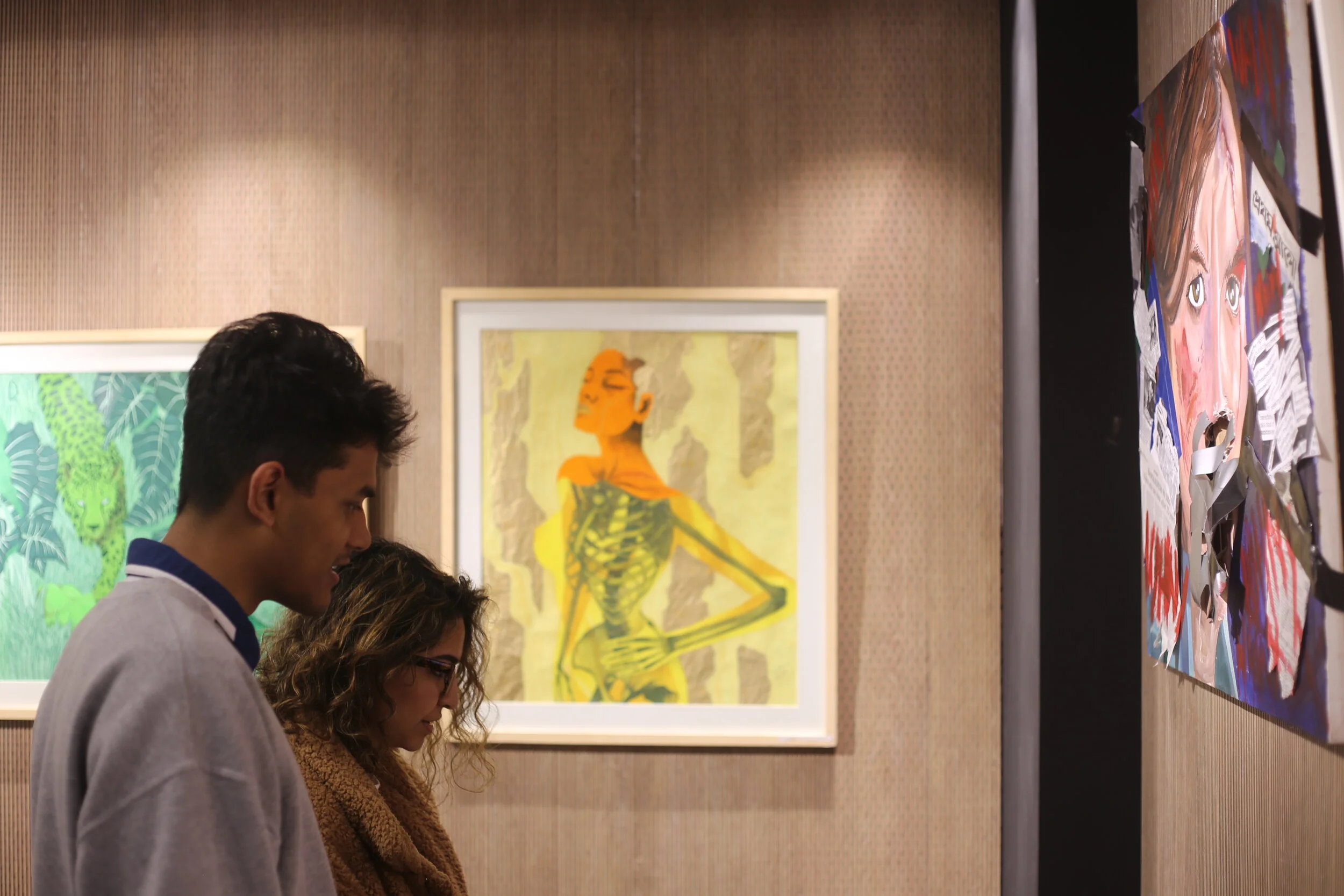
Guests
Chief Guest: Former MP Tarana Halim
Guest Speakers: ProjectDebi
Opening Act: Mumtahina & Jason
Closing Act: Pragata Naoha
Host: Sagorika Haque
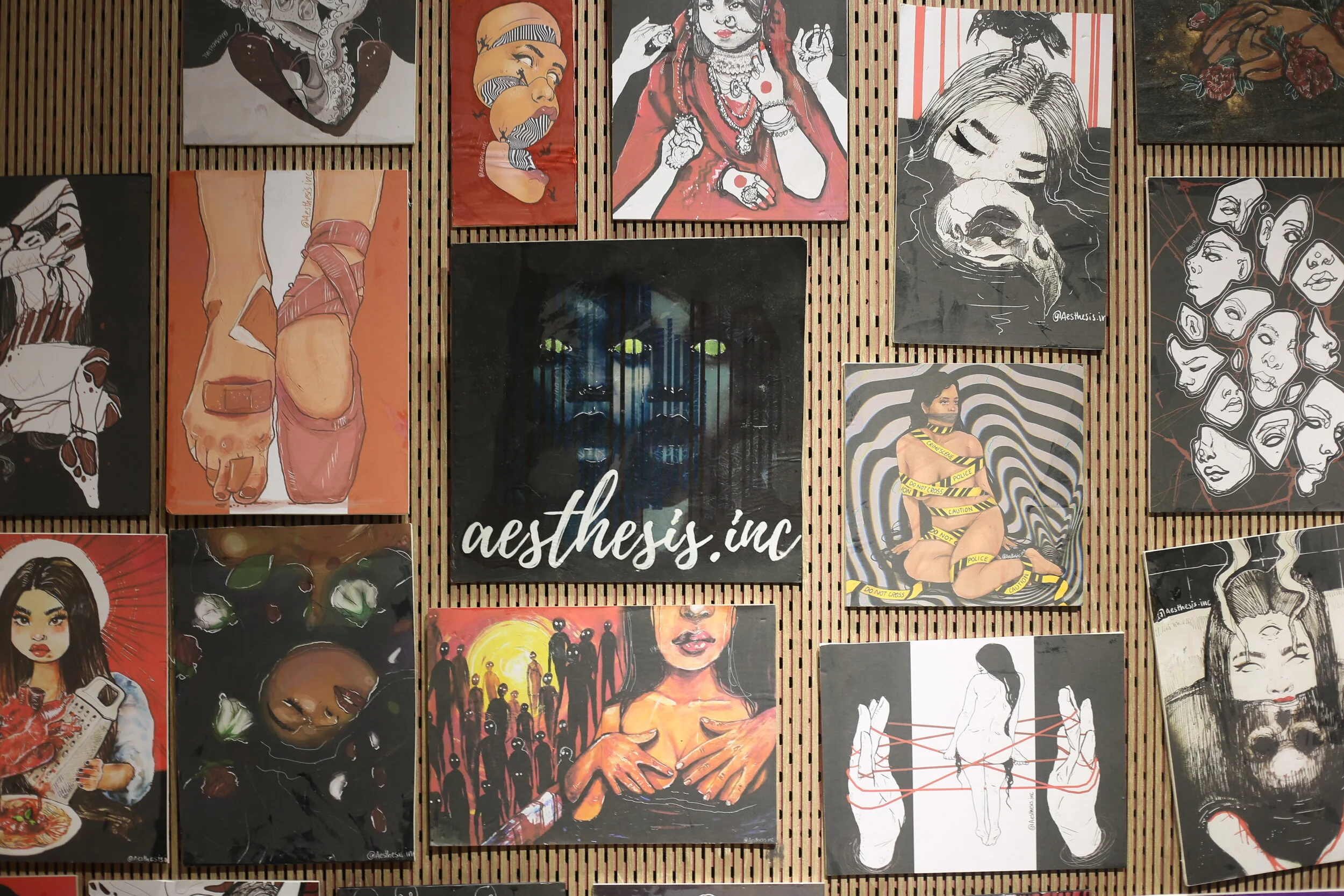
Artists
Anika Anjum
Nishat Nailah
Papia Sarwar Dithi
Venessa Kaiser
Benzadid Gani
Zarin Subha Rodela
Ohama Raaz
Noorin Suhaila Asjad
Zarif Rashid
Afsin A. Trisha
Pracheta Ahana
Rubaiya Amin Rhea
Taiara Farhana Tareque
Fahim Arif
Alveera Rahman
Pushpita Pranjoli
Nafisa Afrin Iqbal
Sakib Tonmoy
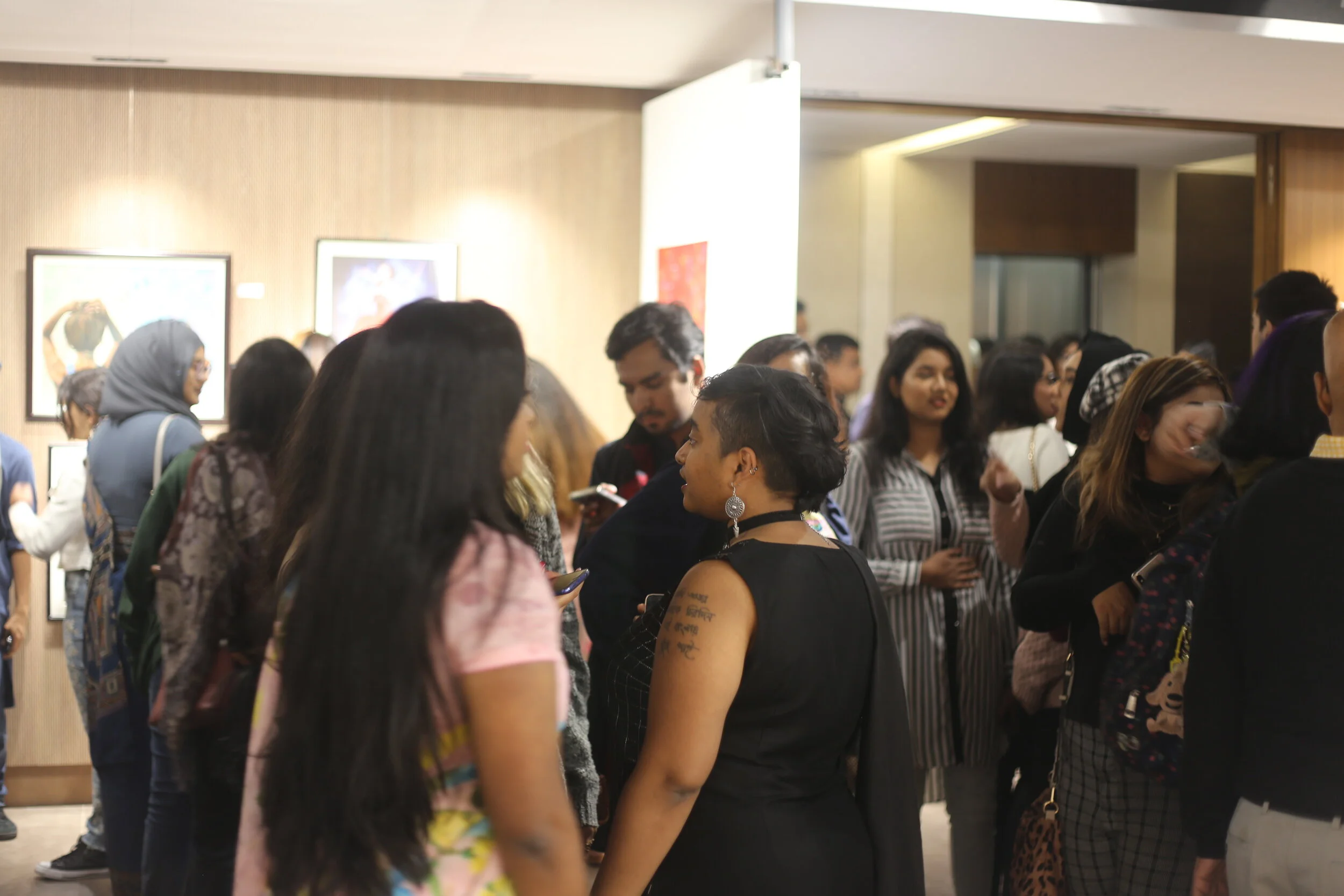
Organisers
Sagorika Haque : Cofounder
Alveera Rahman: Cofounder
Zarin Subha Rodela: Cofounder
Pracheta Ahana: Founder
Whiny Women: The Underlying Concept
In our rapidly evolving world today, image has become dominant. Society is saturated with the visual – social media, horrific news cycles, celebrity culture, advertising. Appearance has always been tangled with ideas of worth – namely how much worth certain looking bodies are entitled to. When complicated by gender, class, race, sexuality, and power relations, appearance can give us insight into the structures of survival we’ve been forced into navigating.
But what do the politics of being actually look like?
What consequences do they have, particularly for “womanhood”?
Women cannot be denied – but how has this “woman” been created? In a complex region as rich in heritage as South Asia, the idea of “woman” has been historically reductive. Deep-rooted cultures of shame, silence, and stigma, on top of colonial histories, have estranged the relationship between the present moment and female bodied lived experience – she has become beyadob, pagol, “shameless”, “indecent”, “Westernized”, “undesirable”, “too loud”, “hysterical”, and “wrong.”
WIAB’s inaugural event, ‘Whiny Women’ focused on the complexity, contexts, and critiques of these representations of the South Asian female form. We aimed to explore the diversity of representation within the home, workplace, pop culture, arenas of desire, and self-expression, highlighting not just the body, but the processes of how the body is created, viewed, and used.
It was open to artists of all genders and walks of life, and was not limited to visual arts. As a mixed media exhibit, we welcomed photographers, performance artists, filmmakers, sculptors, writers, poets, as well as painters and animators – whatever medium in which the artist found justice.
With this exhibit, we drove to create a space of reclamation and resistance – a place for provoking thought and constructive discussion. We wanted to examine and question the derogatory, the overtly positive, the unpleasant, the taboo, the conventional.
Can we ever counteract the fixed values of so-called femininity? What does it mean to live as a woman where you are right now? How does economic privilege complicate voice? What are some toxic aspects of gender, class, and culture we need to end repressing? Who set the mental/physical boundaries you are not supposed to cross? Why is crossing them both essential but rebellious? What is the power the body represents?
The saying goes that everyone suffers but women collectively make more noise about it – why are our experiences made invalid? Why is the narrative of an “unwarranted sense of victimhood” so prevalent given the nauseating violent realities of being a woman in Bangladesh? Are women actually whiny, or are their informed, lived, affecting experiences being demeaned? What does silence look like? Why are emotions viewed as detriment and not merit? How is the woman made through image and expectation?